Monday, 16 December 2013

On event-planning and organizing

This year I have doing some event-organizing. I have not done any event organization before this year, in fact before last June.

Anyways, I had helped out with Research Day 2013 and CHBE Christmas Party.
UBC APSC Research Day 2013
UBC CHBE Christmas Party 2013
Both of these events are very successful, thanks for all the hardworking committee members and some of my helps. 

I learnt plenty from these events, such as I don't have to know someone very well to work with them, the biggest variable in event-planning is human factor and so on. But I think, the most important thing I learnt is that I don't have to be a genius to be part of an organizing committee, and I'm actually capable of doing what event organizers are able to do. 
I felt a tart more confident with myself and my own ability. Special thanks to Dr. S and Dr. L for allowing me to do all these things aside from writing reports and papers and reading journal articles.

Monday, 28 October 2013

Breaking news (at least for me): Malaysia aims to become the major wood pellets producer in Asia (!!!)

According to fordaq, Malaysia is seeking to become Asia's major wood pellets provide!
I'm surprised by this news released. I have not thought that my area of research is heating up in my home country!
Apparently, the demand for wood pellets in Japan, China and South Korea are growing due to implementation of renewable energy policies. The Malaysian authorities (whoever these people are) are planning to cover up to 70% of the total Asian wood pellets demand by year 2020. The Asian demand of wood pellet is projected to grow to about 10 million tons per year.
Comparing to demand forecast in Europe, which is 50 – 80 million tons in year 2020. 10 million tons per year in Asia is quite sizable.
There is even a new organization formed in Malaysia called the Pellet Association of Malaysia (PAM), which aims to gather manufacturers on issues like quality, pricing and volumes.
On the federal government level, a National Biomass Strategy-2020 has been developed to help the pellet industry to reach the proposed targets.

There was a Asian Biomass pellets Conference in Seoul, that was partially sponsored by Pellet Association of Malaysia (PAM). More detail news on this here.


Monday, 21 October 2013

Idea Collection 2

The last time I wrote my FIRST Idea collection was on August 8, 2013! That is more than 2 months ago. Now, I have another stack of paper waiting for me to summarize and compile into a single blog post. The paper stack is not as big as it is shown below, of course. I am trying to avoid that from happening.
So, a number of biggish events have occurred since August 2013. In chronological order, they are:
1. my colleague, Asal Hashemi's MASc Thesis defence on July 9, 2013 on Encapsulation of wood pellets
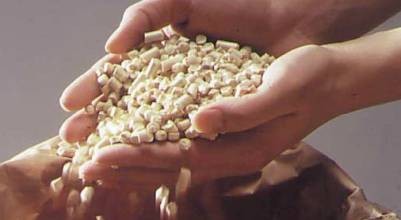
This taught me about the importance of good photos. Her wood pellets were shown in a straight row. That looks great and the sizes of the wood pellets were compared visually as well.
2. Linoj joined my research group, Biomass and Bioenergy Research Group as a Post-Doctoral Fellow in July 2013. During a group meeting, he mentioned that as graduate students of a research group, we should build on the researches that was done in the group and expand your own research on them
3. a Lab Tour of AMPEL Surface Characterization Laboratory on August 14, 2013. This made me realized that I have a great facility for surface properties analysis just right across the street! The laboratory offers mu-Ranman, SEM-EDX, XPS, ToF-SIMS and other high precision surface analysis.
4. a Visit to Williams Lake Pinnaccle Pellet Plant (image below) on August 20, 2013. This trip was just, "WOW!" Totally an eye-opener! They has no self-heating issues at the plant because the turnover of raw materials and wood pellets are less than 1 week!

IDEAS

  1. Oxidation of extractives produce higher energy potential chemical species. Adsorption of this higher energy chemical species might have increased the calorific value of my wood pellet over close storage.
  2. In the case of high moisture content, microbial degradation of cellulose & hemicellulose (C&H) especially by brown fungi reduces C&H content, and results in an increase of lignin content
  3. On the latest account in October 2013, the price of wood pellet in Europe (German in particular) is 260-300 per tonne!
  4. Methanol formation in Kraft pulp mill is through the demethylation of xylans (i.e. hemicellulose) and lignin by hydroxidie OH- ion through rapid alkaline hydrolysis reaction

COMMENTS

I found that I have so many things and important information that I have written down on pieces of paper. Now that I look back to them, I felt that it is hard to write them all down. There are just so many information. I think I will write another Idea Collection real soon on the technical/research ideas that I have written down.

Tuesday, 15 October 2013

"Biomass as a renewable source of energy" & "Microalgal protein: a new source of plywood adhesive"

UBC APSC Research Day 2013 went successfully! Below is the projection during the evening reception of the Research Day in UBC Chemical & Biological Engineering Department.
As part of the organizing committee, I have spent almost 80% of my time working on the pre-event preparation and purchase and logistics. Now I finally got a bit of time to post summary of two of the latest literature that came in my google scholar alert.

1. "Biomass as a renewable source of energy"
Drożyner, P., Rejmer, W., Starowicz, P., Klasa, A., & Skibniewska, K. A.. 2013. Biomass as a renewable source of energy. Technical Science.

In this review, the authors actually focuses on the available/suggested technology in/for Poland. I like how biomass-related articles stated the fact that "Energy from renewable sources, although more expensive than conventional energy, has many advantages. It leads to reduction of carbon emission to atmosphere, is compatiable with rules of balanced development [1st time I heard of this], reduces the dependence on fossil fuels and is not as dangerous as atomic energy [LOL, biomass energy IS very dangerous huh...]. 
Biomass can be in solid state (e.g. briquettes, pellets), liquid state (biodiesel, methanol, ethanol) or gas form (biogas, syngas and hydrogen). In Poland, biomass is getting more popular to be used in electricity generation. The author briefly discussed 7 types of biomass sources: (1) energy dedicated willow (short-rotation coppice- SRC Willow), (2) sweet sorghum (shown in picture below), (3) giant miscanthus, (4) Jerusalem artichokes, (5) Oil palm [Oh, this is all over my country, Malaysia], (6) Agricultural wastes, e.g. straw, stems, manure, whey, mollasses. (7) Wastes of food and agricultural industry e.g. peelings, seeds, mill cakes of juice and beer production, distillery stillage, slaughter waste.

Then the article has a shift switch to Methane/biogas production through fermentation. An interesting process mentioned is a two-step production of hydrogen in 1st step and methane in 2nd step through fermentation of Laminario japonic i.e. kelp or Dashi kombu. I like plenty of Dashi stock in my miso soup.

Roy, J. J., Sun, L., & Ji, L. 2013. Microalgal proteins: A new source of raw material for production of plywood adhesive. Journal of Applied Phycology, 1-8.

My supervisor, Dr. S, mentioned that I might be working on understand the adhesives that bind wood pellets together. So, this will be my 1st review of adhesive literature on my blog.
Adhesives is predominantly based on urea or melamine formaldehyde technology. Formaldehyde has been recognized as human carcinogen. Thus, a safer, more sustainable method of adhesive production has to be introduced. Compared with plants, microalgae are more productive for biomass and proteins. They do not compete directly for farm land. Algal proteins have a much more balanced composition of amino acids. The reactive groups in these amino acids can be effectively used for chemical modification and cross-linking to improve the bonding quality of algae-base adhesive. 
The author produced Type II adhesive (Interior-use plywood adhesive, only slightly water resistant) from dry algal cells (Spirulina platensis and Chlamydomonas reinhardtii). They noted that protein in SPPI (Spirulina Platensis Protein Isolate) were already denatured in the preparation process and were not present as protein bodies as in soybean floor. Nevertheless, NaOH treatment of the protein isolate still signficantly improved the adhesive strength. CRPI (Chlamydomonas reinhardtii Protein Isolate) made better plywood adhesive as it showed better adhesive strength and water resistance than SPPI, shown similar level as SPI (soy protein isolate). Overall, the microalgal protein isolates showed promising adhesive properties that meet the type II plywood standard. Glyoxal was found to be the best cross-linker for these two algae proteins. 

Saturday, 5 October 2013

Introduction to Matlab

I wish to keep a record of my scanned file here.
https://www.dropbox.com/s/0wh0r411tmnx3cb/Introduction%20to%20Matlab.pdf

It is a freaking 3MB file....

The PDF is from Appendix A of Numerical Methods for Chemical Engineers with MATLAB application by Constantinides and Mostoufi (2000).

The thing is most important thing on this pdf is that, to import data,
we can type

load f3.txt

where f3 is a text file with an .txt extension

Sunday, 29 September 2013

Addressing Marketplace Durability Issues with Mountain Pine Beetle (MPB) Infected Wood (Summarizing Byrne & Uzonovic (2005))

Since I started working with wood pellets, I always feel that MPB wood has inferior quality than regular non-infected wood. The blue-stained wood of MPB wood made the wood appears "unnatural", which leads me to think that the wood is no good, i.e. lack of strength and durability.
But it is not true!

According to the work done by Byrne & Uzonovic (2005) and other wood scientists, the temperate bluestain fungi, unlike tropical bluestain fungi, does NOT damage the wood structure. Bluestain fungi are harmless and do NOT attack the wood itself but live on nutrients stored in a small proportion of wood cells.
Temperate Bluestain fungi on the wood surface (Byrne & Uzonovic, 2005)
Furthermore, According to tests done at Forintek Canada Corp, and other research laboratories, there is NO practical difference in strength between stained and non-stained pine. Bluestained wood is commonly used for construction in North America. The only concern is that bluestained wood has a higher water permeability which might cause the wood to retain more moisture ONLY if it is not well dried and stored. But wood is an perishable organic material at the right moisture content, whether it is bluestained or not.

Anyhow, well-treated bluestained wood CAN be used interchangably with non-stained wood. If the blue color is NOT desirable, the right combination of dark finshes can be used to hide any bluestain. The picture below is an example of dark finish that can be used to cover any bluestain.

I hope the general public is more receptive to the idea that bluestain wood is as good as non-stained wood, at least in the strength and durability point of view.

Wednesday, 11 September 2013

News summary II

News 1: European pellet consumption expected to triple by 2020

The latest report of consumption forecasts for 2020 range from 35 million metric tonnes for Western Europe (Pöyry) to 50 – 80 MMT for the total EU (AEBIOM). German is the largest producer of wood pellets in the EU, which produced 2 million metric tonnes in year 2013. Sweden comes second with total production of 1.35 million metric tonnes in year 2013. The production is expected to remain stagnant in the future years due to "weak investment climate and the limited availability of feedstock supplies".
Canadian wood pellet exports, 2012

News 2: US may cover half share of total European wood pellets imports by 2014
Quoting the new, in 2012, U.S. wood pellets exports were boosted by seventy percent to nearly 1.8 MMT, representing a value of US$ 331 million. That means the report gave a price estimates of $185 per MT.

Note: MMT is million metric tonnes; MT is metric tonne.


News 3: Korea looks to Indonesia for wood pellets
According to data from Korea, Indonesia offers the cheapest pellet, with the cost, insurance and freight (CIF) price of US$ 131 per ton, below Vietnam’s US$ 144 per ton, and Malaysia’s US$ 141 per ton.
Following this news, I checked the quality of the Malaysian wood pellet (because I'm a Malaysian). After a quick google search, I found the specification of wood pellet for this company, TG Quantum Wood Pellet.
TG Quantum Wood Pellet Specification
the gross calorific value is 5299 kcal/kg, or 22.2 MJ/kg. That is at the higher end of dry mass calorific value of woody biomass. My wood pellet from Pinnacle pellet, which has no binder, has a dry mass gross calorific value is 20.3 MJ/kg. I am quite sure they added some extra binders into their wood pellets that causes the gross calorific value to be so high.